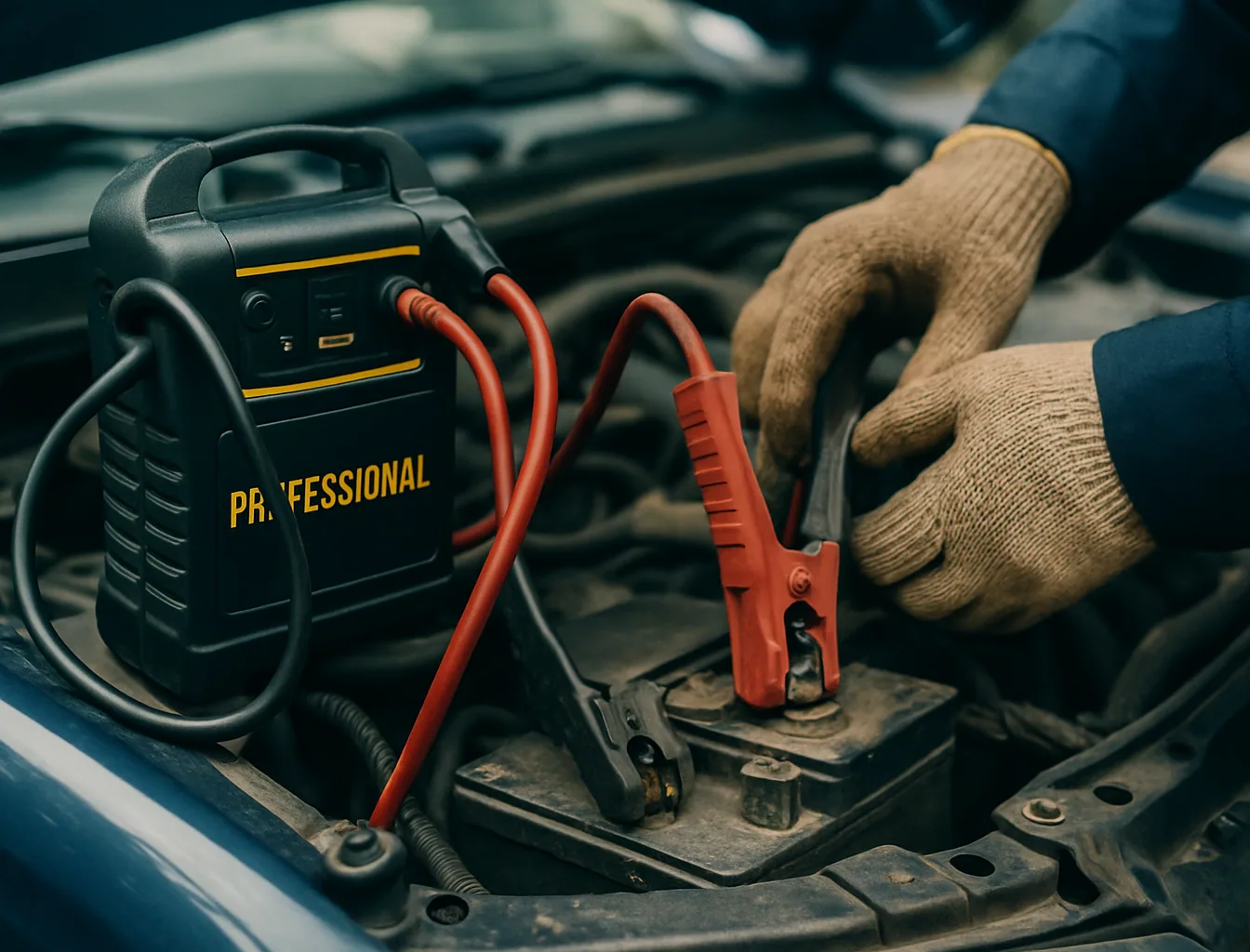
A jumpstart sounds simple, connect cables, start the car, done. But a professional jump is more involved than what your neighbor does with a pair of cables from the trunk, and the difference matters for your vehicle's health.
Surge-protected jump box
Consumer jumper cables create a direct electrical bridge between two vehicles. If the donor battery surges or the connection sparks, you risk frying sensitive electronics, infotainment, body control module, or ECU. Our commercial jump boxes have built-in surge protection and voltage regulation. This is especially important on vehicles manufactured after 2015.
Battery terminal inspection
Before we connect anything, we check your battery terminals for corrosion, loose connections, and physical damage. Corroded terminals are a common reason a battery "dies" even when the battery itself is fine. If corrosion is the issue, we clean the terminals on the spot.
Post-jump battery and alternator test
After starting your vehicle, we connect a diagnostic tool that reads cold cranking amps (CCA) and alternator output voltage. A healthy battery reads close to its rated CCA. A healthy alternator puts out 13.5-14.5 volts at idle. If your battery reads below 60%, it is on its way out. If your alternator reads below 13 volts, it is not charging the battery.
What to do after the jump
Drive your vehicle for at least 20 minutes without stopping. Highway driving is best, higher RPMs charge the battery faster. Avoid short trips for the rest of the day. If the battery tested weak, drive directly to an auto parts store (AutoZone, O'Reilly, NAPA) for a bench test and possible replacement.