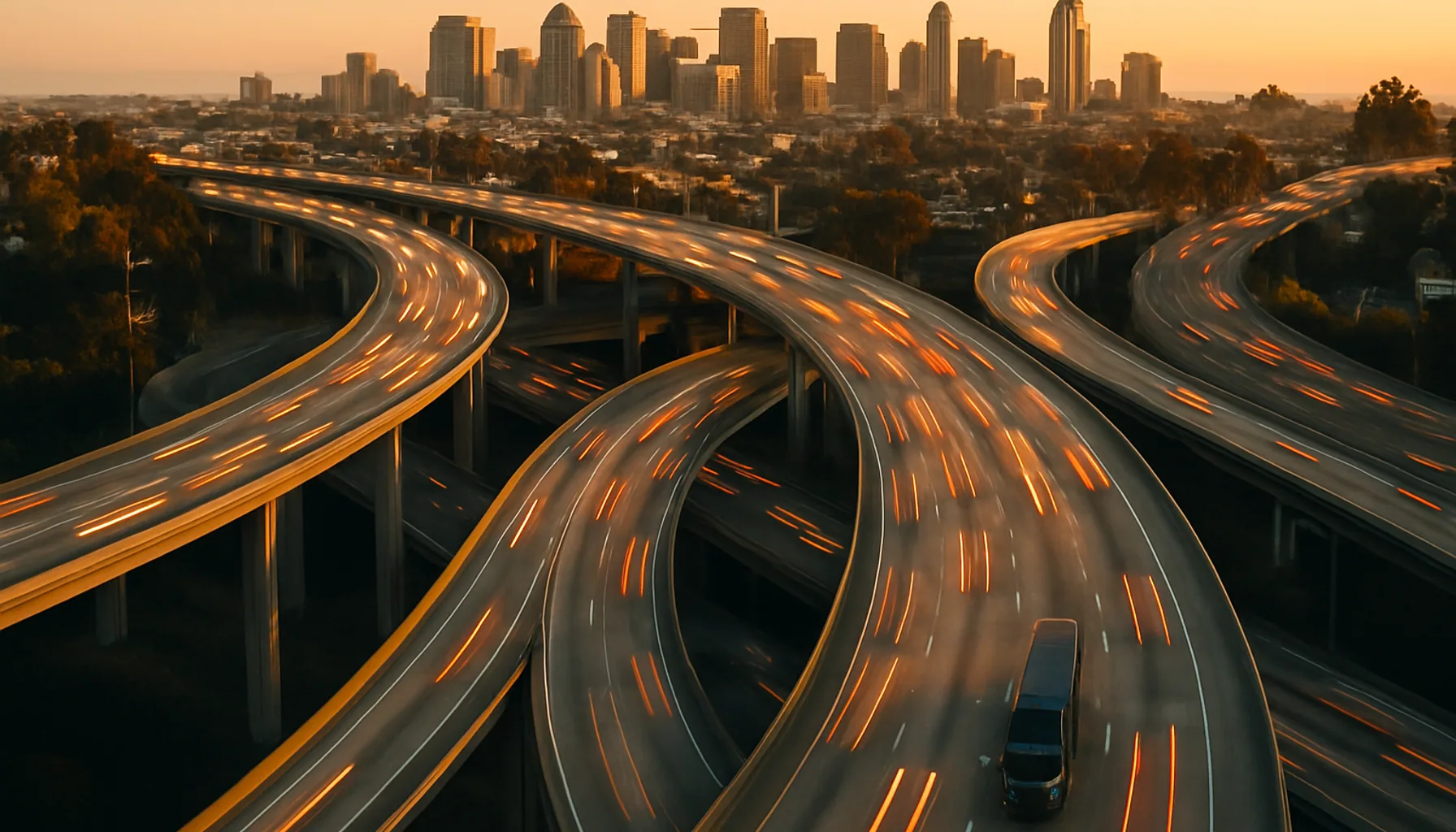
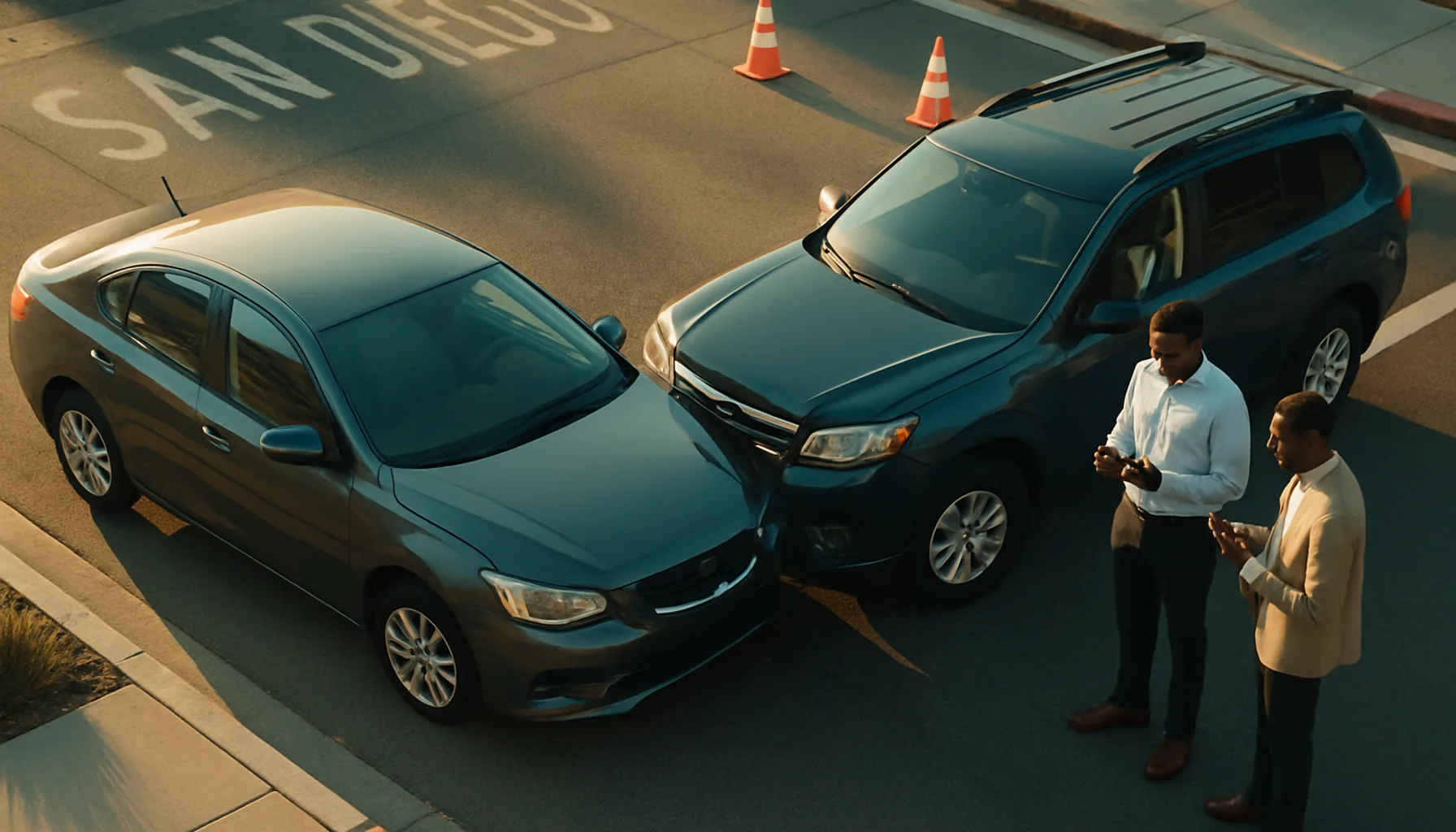
Your engine just died on I-5. Or your tire blew on I-8. Or your temperature gauge pegged into the red on I-15 and steam is pouring from under the hood. You're on a San Diego freeway, traffic is flying past at 70 mph, and you need to figure out what to do right now.
This guide covers every major freeway in San Diego County, where to pull over, what hazards to watch for, and what to do until help arrives. It's written by the RJ Towing team, and between our drivers, we've responded to breakdowns on every single road listed here. Some of them hundreds of times.
If you're reading this from the side of a freeway right now: turn on your hazard lights, stay in your vehicle if you're on the shoulder, and call (619) 304-0457. We'll come get you.
General Rules for Any Freeway Breakdown
Before we cover specific freeways, these rules apply everywhere:
- Signal and move right immediately.The moment you feel something wrong, loss of power, a bang, steam, grinding, put on your right blinker and start moving toward the shoulder. Don't wait to “see if it gets better.” It won't.
- Get as far right as possible. The right shoulder is your safe zone. If you can make it to an exit ramp, even better. If your car dies in a travel lane, do not get out. Stay belted in with hazards on.
- Turn on hazard lights.This is your first action once you've stopped. Day or night.
- Stay in the vehicle. Do not get out to look under the hood. Do not walk along the freeway shoulder. Do not try to cross lanes to reach an emergency call box. Pedestrians on freeways are struck and killed in San Diego every year. Stay in the car and make your calls from inside.
- Call for help.If you feel unsafe or your car is in a travel lane, call 911. If you're safely on the shoulder, call a tow company. In San Diego, CHP also operates the Freeway Service Patrol, free assistance trucks that patrol major freeways during commute hours. Dial 511 to reach them.
- If you must exit the vehicle, exit from the passenger side (away from traffic) and move behind the guardrail or up an embankment. Never stand between your car and traffic.
I-5: Border to Oceanside
Interstate 5 is San Diego's spine, 60+ miles from the Mexican border at San Ysidro to the Orange County line past Oceanside. It's also the freeway where we get the most breakdown calls, because it carries the most traffic.
San Ysidro to Downtown (Mile 0-15):This stretch runs through Chula Vista, National City, and into downtown San Diego. Shoulders exist but are narrow in the National City section, especially near the I-805 merge. The bridge over the Sweetwater River has minimal pull-off space. If you break down between the border and downtown, try to reach an exit, there's one roughly every mile.
Downtown through Mission Valley (Mile 15-20): This is the worst place to break down on I-5. The lanes are narrow, shoulders are sometimes nonexistent (especially on the elevated sections through downtown), and traffic volume is relentless. The merge with I-8 in Mission Valley is chaotic during peak hours. If you lose power here, get right as fast as you can. Even a partial shoulder is better than a travel lane.
Mission Valley to La Jolla/Del Mar (Mile 20-30): Conditions improve north of the I-8 merge. Shoulders widen. The Sorrento Valley section has decent pull-off areas. Once you pass through the Torrey Pines area and reach Del Mar, the shoulders are generous and there are regular emergency call boxes.
Del Mar to Oceanside (Mile 30-60): The widest, most modern section of I-5 in the county. Full shoulders both sides. Regular exits. Good cell phone coverage. If you have to break down on I-5, this is the best place for it.
Watch for:CHP has a strong presence on I-5. If you're on the shoulder, a CHP officer will often stop to check on you within 15-20 minutes during daylight hours.
I-8: Ocean Beach to El Cajon and Beyond
Interstate 8 runs east-west from Ocean Beach through Mission Valley, through the College Area and La Mesa, into El Cajon, and then up into the mountains toward Pine Valley and the Imperial Valley.
Ocean Beach to Mission Valley (Mile 0-5): Moderate shoulders. The I-5/I-8 interchange is tight and confusing. If you break down in the interchange itself, you may end up on a ramp with nowhere to pull over, turn on hazards and coast as far as you safely can.
Mission Valley (Mile 5-8): Heavy traffic, especially near the stadium (now the Snapdragon Stadium area) and Fashion Valley. Shoulders are present but narrow in spots. Exits are frequent, which helps.
College Area through La Mesa (Mile 8-15): Conditions are generally decent. Standard shoulders. Frequent exits. SDSU area generates heavy traffic during events.
La Mesa to El Cajon (Mile 15-20): The freeway climbs slightly here. Shoulders exist. Traffic thins a bit compared to Mission Valley.
East of El Cajon, The Mountain Grade (Mile 20+): This is where I-8 becomes a completely different road. East of Alpine, you're climbing into genuine mountains. The grade toward Pine Valley is steep, and overheating is a real risk for vehicles towing trailers or older cars with weak cooling systems. Shoulders narrow. Cell phone coverage drops significantly past Alpine. If your car is struggling with the grade, pull off at the Alpine exit before it gets worse.
Watch for:The CHP Freeway Service Patrol covers the western portion of I-8 during commute hours. East of El Cajon, you're on your own, cell coverage is spotty and wait times for a tow truck increase because of the distance.
I-15: Downtown to Escondido
Interstate 15 runs north-south from downtown San Diego through Kearny Mesa, Miramar, Rancho Bernardo, and up to Escondido and beyond.
Downtown to Kearny Mesa (Mile 0-8): Moderate traffic, decent shoulders. The I-15/I-8 interchange is complex but manageable.
Miramar Area (Mile 8-14):This section runs past Marine Corps Air Station Miramar and is known for two things: heavy truck traffic from military operations and frequent construction zones. The “Miramar hill”, the grade between Miramar Road and Poway, is steep enough that underpowered vehicles struggle, especially in summer heat. Overheating breakdowns are common here.
Rancho Bernardo to Escondido (Mile 14-30): Wider road, better shoulders, less traffic density. The managed lanes section has added capacity but also added confusion for some drivers. If you break down in a managed lane, signal right and work your way to the standard shoulder, do not stop in the managed lane.
Watch for: Construction has been ongoing on I-15 between Miramar and Rancho Bernardo for years. Lane shifts, temporary barriers, and narrowed shoulders are common. Pay extra attention to where the actual shoulder is, because it may not be where you expect.
I-805: South Bay to Sorrento Valley
Interstate 805 parallels I-5 through the eastern side of San Diego, from the border area through Chula Vista, National City, City Heights, Kearny Mesa, and up to the I-5 merge near Sorrento Valley.
Chula Vista to National City (Mile 0-8): Decent shoulders in most sections. The interchanges with SR-54 and SR-94 are busy.
The I-805 Bridge and City Heights (Mile 8-15): The elevated bridge section over the valley near University Avenue has extremely limited shoulder space. A breakdown here puts you in a vulnerable position. If you feel your car failing in this section, push for the nearest exit before you lose all power.
Kearny Mesa to Sorrento Valley (Mile 15-25): Better conditions. Wider shoulders. The merge with I-5 near Sorrento Valley is the end of the line for I-805.
Watch for: The I-805/SR-52 interchange is a high-accident zone. Aggressive merging and speed differentials between freeway traffic and merging traffic cause problems daily.
SR-163: Downtown to Kearny Mesa
State Route 163 is one of San Diego's most scenic freeways, and one of its most dangerous for breakdowns.
Downtown through Balboa Park and Hillcrest (Mile 0-5): This section was designed decades ago for far less traffic than it carries today. The lanes are narrow, curves are tight, sight lines are limited, and in several stretches through Hillcrest and near Balboa Park, there is no shoulder at all. Not a narrow shoulder, no shoulder. If your car dies in this section, you're in a travel lane with nowhere to go.
Do not get out of your car. Turn on hazards, call 911, and stay buckled in. CHP will respond to clear the lane.
Hillcrest to Kearny Mesa (Mile 5-10):Conditions improve past the Hillcrest/University Avenue area. By the time you reach the I-15 interchange, you're on a modern freeway with standard shoulders.
Watch for:SR-163 has the most dangerous combination of narrow lanes, no shoulders, curves, and speed in the entire county. If you know your car has been acting up, overheating, check engine light, rough idle, avoid SR-163 until you get it serviced. Break down on the 163 through Hillcrest and you're in a very bad spot.
SR-52: Santee to La Jolla
State Route 52 runs east-west across the northern part of the city, connecting Santee through Tierrasanta, Clairemont, and out to La Jolla near UCSD.
Conditions are generally good. Full shoulders in most sections. Moderate traffic except during commute hours near the I-805 and I-15 interchanges. The western end near the I-5 merge is newer and well-designed.
Watch for: The Tierrasanta section has limited access points. If you break down between Santo Road and Mast Boulevard, you may have a longer wait for a tow truck because the exits are spaced farther apart.
SR-94 and SR-125
SR-94 runs from downtown San Diego east through Lemon Grove and into Spring Valley and Jamul. The western section (downtown to Lemon Grove) is freeway-grade with shoulders. East of Lemon Grove, it narrows to a surface highway with limited pull-off areas.
SR-125is a north-south toll road through the South Bay. Well-designed, modern shoulders, low traffic compared to I-5 and I-805. If you break down on the 125, you're in relatively good shape, pull to the shoulder and call for help.
Cell Phone Coverage Gaps
Most of San Diego's urban freeways have strong cell coverage from all major carriers. But there are dead zones:
- I-8 east of Alpine, Coverage drops dramatically in the mountain grades
- SR-52 near Tierrasanta, Spotty in canyon areas
- I-15 north of Escondido toward Fallbrook, Gaps in rural stretches
- SR-94 east of Spring Valley, Rural territory with weak signal
If you drive these routes regularly, consider keeping a portable phone charger in your car. A dead phone battery on top of a dead car battery in a coverage gap is a worst-case scenario.
What to Have in Your Car
Every San Diego driver should keep these in their vehicle:
- Portable phone charger (fully charged)
- Bottled water (especially in summer, San Diego heat is no joke if you're stuck on a shoulder for 30 minutes)
- A basic first aid kit
- Reflective triangles or flares
- The phone number of a tow company you trust, saved in your phone
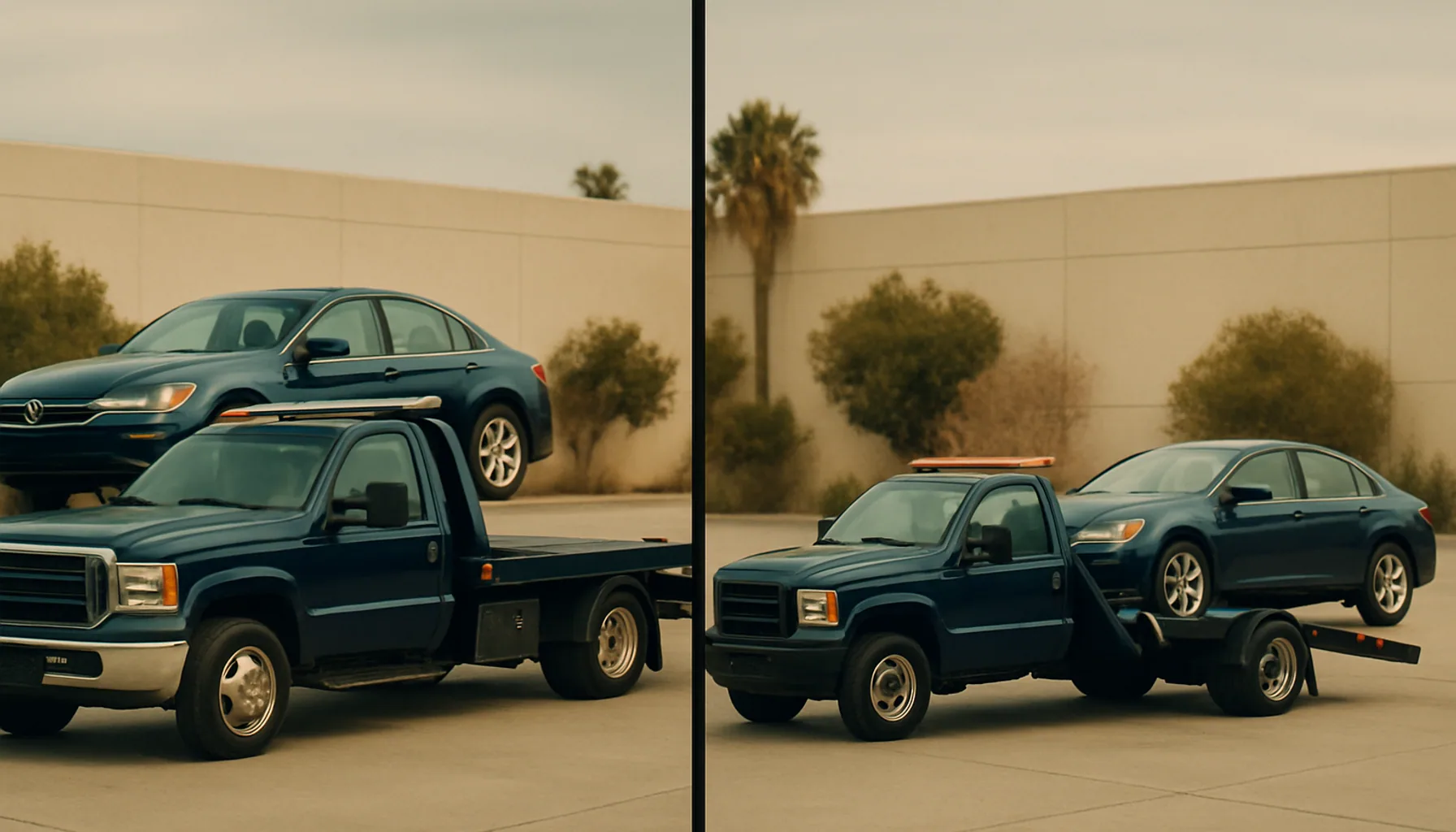
Our number is (619) 304-0457. We respond to freeway breakdowns across San Diego County, 24/7/365. If you're stuck on any of the roads in this guide, call us. We know exactly where you are and exactly how to get to you.
¿Necesitas ayuda en español? Llama al (619) 304-0457, hablamos tu idioma.
Written by the RJ Towing team, 15+ years serving San Diego. For emergency towing, roadside assistance, or any breakdown on any San Diego freeway, call (619) 304-0457.