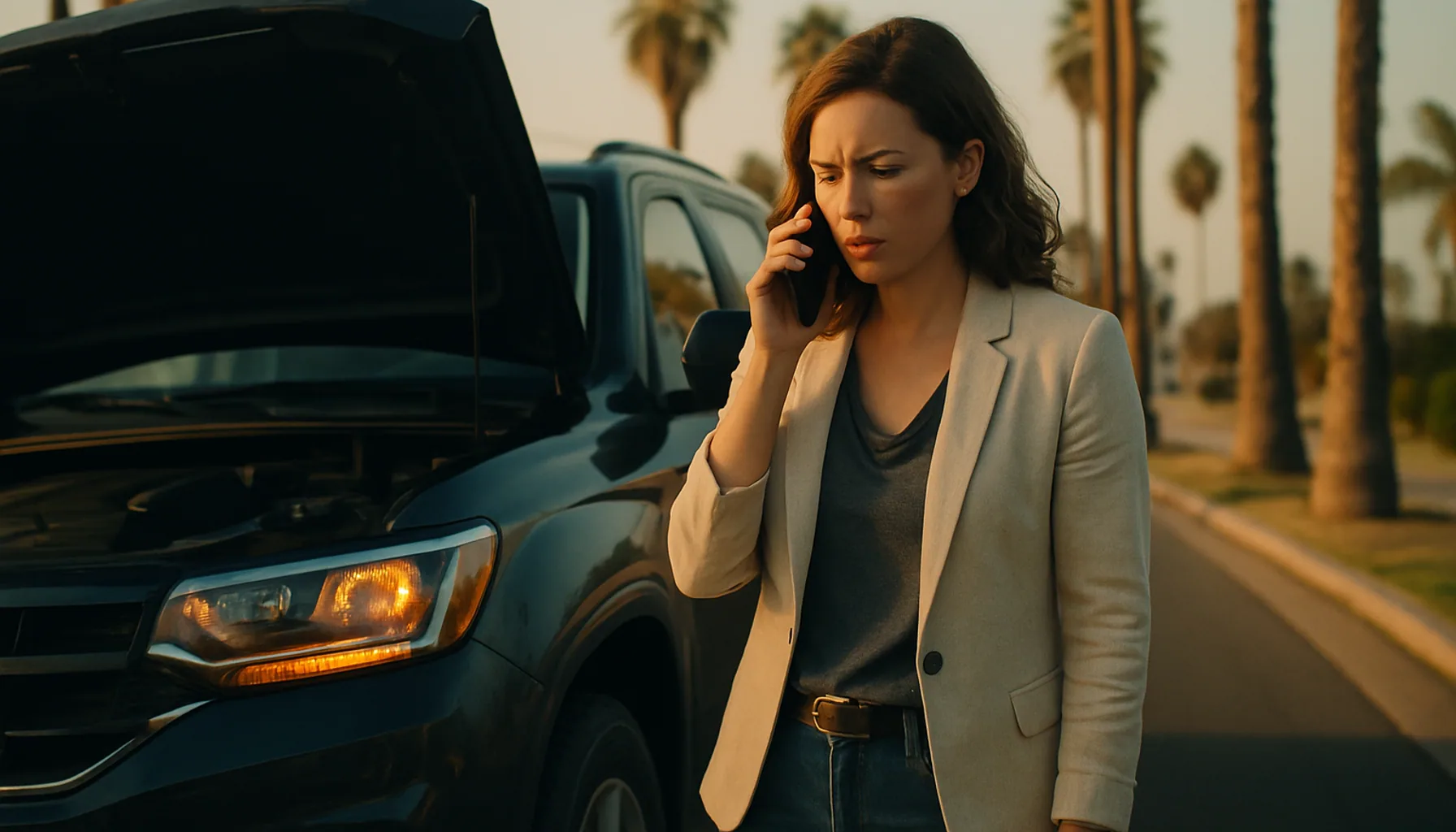
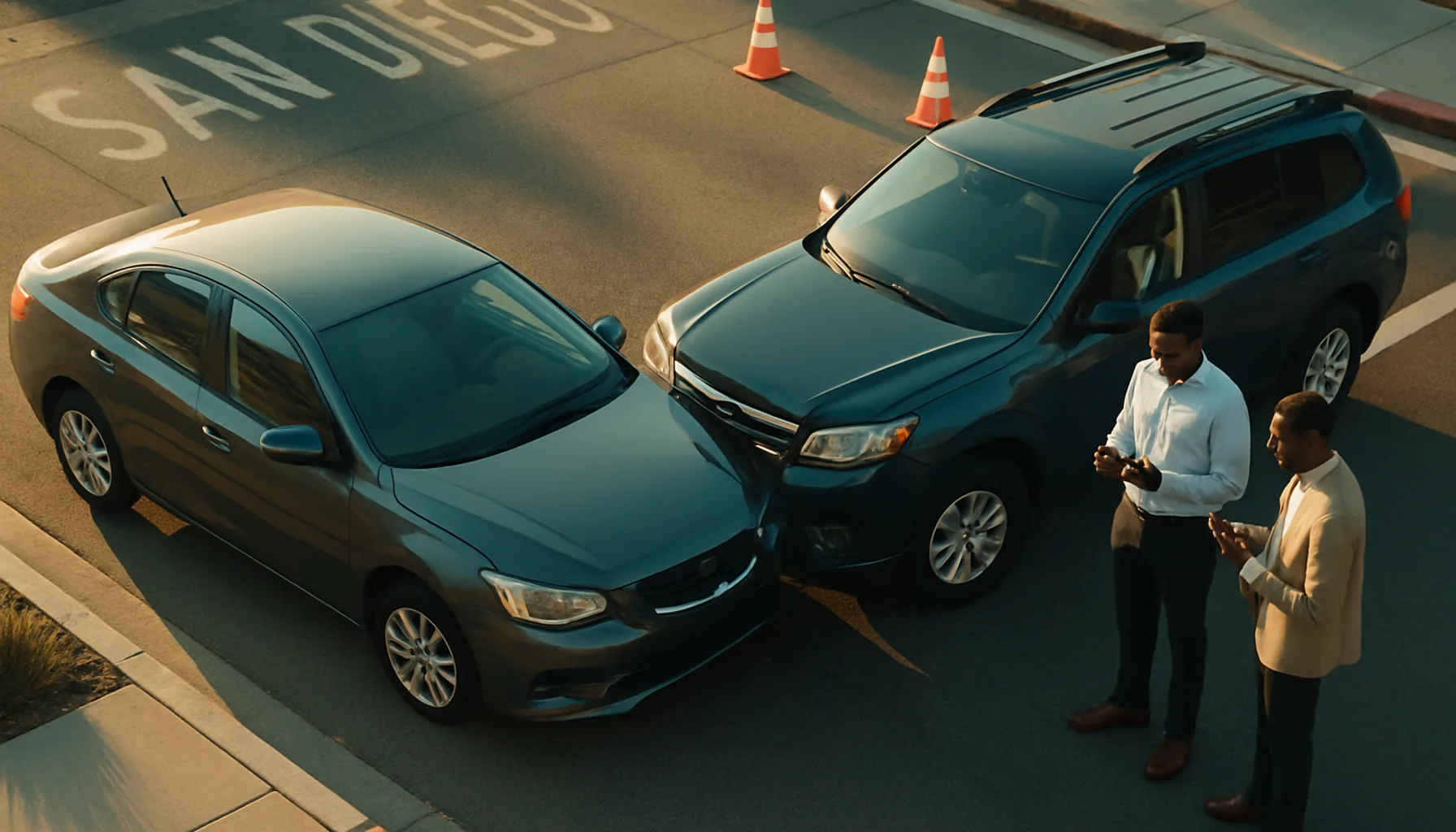
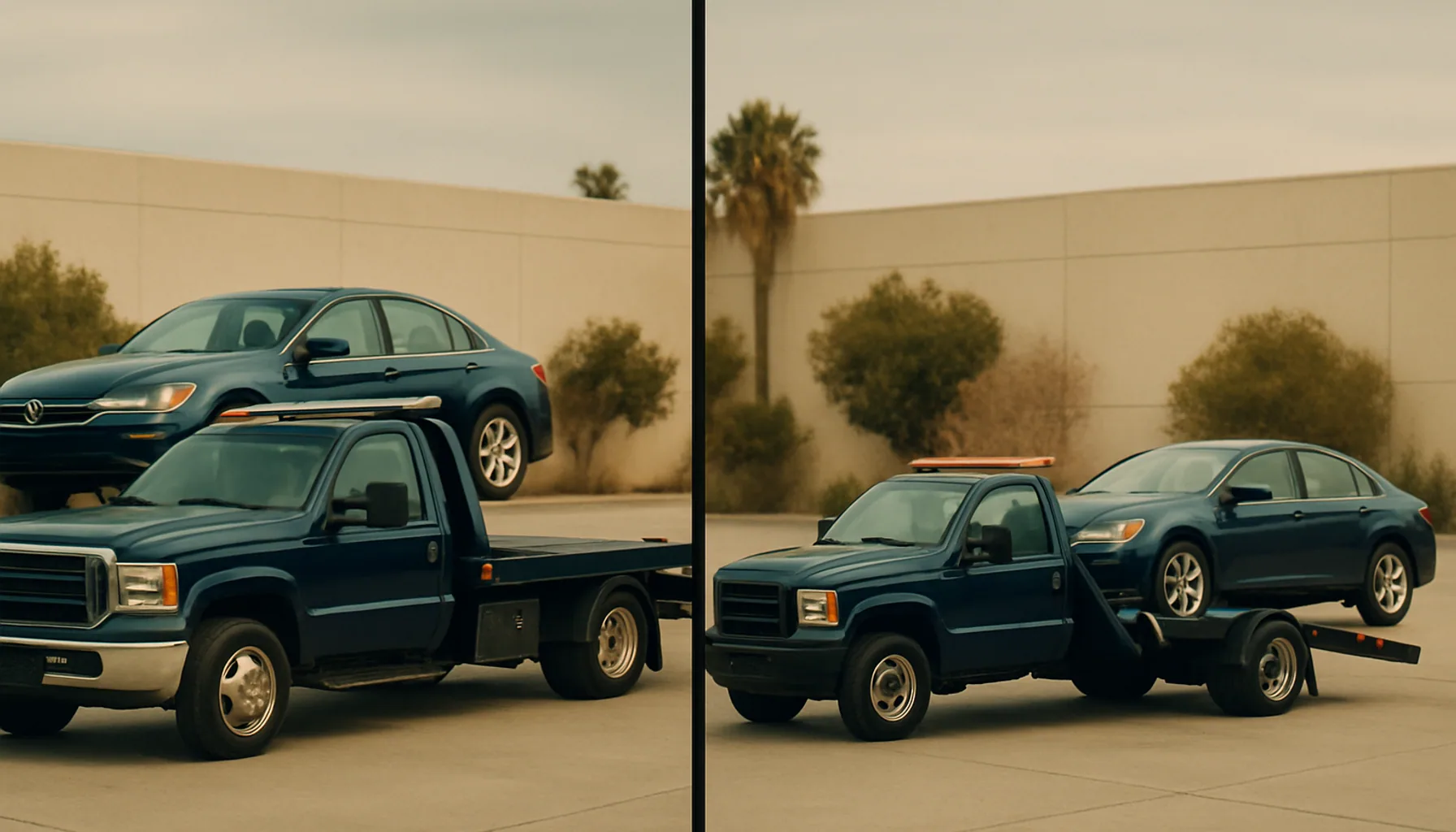
You probably aren't reading this for fun. You're reading this because your car broke down, you got in an accident, or you're locked out, and you're staring at a list of towing companies on your phone trying to figure out which one to call.
Or maybe you're the planning-ahead type. Either way, this guide is going to save you money, frustration, and possibly damage to your vehicle. Not all tow companies are the same. Some are excellent. Some will ruin your day worse than the breakdown that stranded you.
Here's what matters, from a family-owned towing company that's been doing this in San Diego for over 15 years.
1. They Should Be Licensed by the State of California
This is non-negotiable. Any tow company operating commercially in California must hold a CPUC (California Public Utilities Commission) permit. This permit means they've met the state's minimum requirements for insurance, equipment standards, and operational practices.
Ask any company you're considering: “What's your CPUC permit number?” A legitimate company will give it to you without hesitation. If they say “we don't need one” or “we'll get back to you on that”, hang up. An unlicensed tow operator is uninsured by definition, which means if they damage your car during transport, you have no recourse.
You can verify CPUC permits on the California Public Utilities Commission website. It takes 30 seconds.
2. They Should Carry Real Insurance
Licensed tow companies carry commercial auto liability insurance and cargo insurance that covers your vehicle during transport. This is separate from the CPUC requirement, it's the specific policy that protects your car.
Ask: “Are you insured to cover damage to my vehicle during towing?” If a company gets evasive or tells you “don't worry about it,” worry about it. A professional company will tell you their coverage amounts clearly.
This matters more than you think. Towing involves loading a disabled or damaged vehicle onto a truck using hydraulic equipment. Things can go wrong, scratched paint, bent bumpers, dropped vehicles. With proper insurance, that's a claim. Without it, that's your problem.
3. They Should Have Real Google Reviews, and Lots of Them
Google reviews are the single best indicator of a towing company's actual quality. Not Yelp (too easily gamed), not their own website testimonials (obviously curated), not BBB ratings (pay-to-play). Google reviews, on their actual Google Business Profile.
Here's what to look for:
- Volume: A company with 5 reviews might be new or might be hiding bad ones. A company with 50+ reviews has a real track record.
- Recency: Are the reviews from this year? Or did they get a batch of 5-stars three years ago and nothing since?
- Specificity: Real reviews mention details, “he arrived in 20 minutes on I-5 near downtown,” “she was patient while I figured out which body shop to use.” Fake reviews say “great service, highly recommend.”
- Response: Does the company respond to reviews, especially negative ones? That shows they're paying attention and accountable.
Be skeptical of any tow company with a perfect rating but only a handful of reviews. Be more impressed by a company with 4.8 stars and 100+ reviews where you can read real stories from real people.
4. They Should Give You a Clear Price Before They Dispatch
This is where the towing industry's worst actors do the most damage. Here's the scam: you call, they say “we'll take care of you,” they show up, load your car, and then hit you with a bill that's double or triple what you expected. You're stuck because your car is already on their truck.
A legitimate towing company will give you a clear quote before dispatch. They'll explain their pricing structure, typically a hook fee (the base charge for showing up and loading), a per-mile charge, and any applicable premiums (flatbed surcharge, after-hours, heavy vehicle). The total should be calculable before they roll.
Ask these questions before you agree to dispatch:
- “What's the hook fee?”
- “What's the per-mile charge?”
- “Is there a flatbed surcharge?”
- “Is there an after-hours or weekend surcharge?”
- “What's the estimated total for my tow?”
If a company won't give you a straight answer, if they say “it depends” or “we'll figure it out when we get there”, that's not flexibility, that's a setup. Call someone else.
5. They Should Give You a Specific ETA
“We'll be there as soon as possible” is not an ETA. A real towing company with an available truck and a competent dispatcher will tell you: “We have a truck 12 minutes from your location. He can be there in 15-20 minutes.”
San Diego is a big county. If you're in La Jolla and the nearest truck is in Chula Vista, that's a 30-40 minute ETA, and an honest company will tell you that. If they say “15 minutes” when there's no way they can make it in 15 minutes, that's a company that lies to close the deal.
A specific ETA also tells you the company actually has a truck available. Some companies take every call, then subcontract to whoever's free, which means unpredictable wait times and a driver who doesn't work for the company you called.
6. They Should Be Available 24/7
Cars don't only break down during business hours. In fact, many of the worst situations, accidents on dark freeways, lockouts in unfamiliar neighborhoods, dead batteries at 5 a.m., happen at night and on weekends.
A genuine 24/7 operation means a live human answers the phone at 2 a.m. on a Sunday. Not a voicemail. Not a “leave a message and we'll call you back.” A dispatcher who can take your information and send a truck right now.
Test this before you need it: call the company's number after midnight. If a real person answers, that's a 24/7 operation. If you get a voicemail tree or an answering service that “pages” a driver, that company is going to make you wait.
7. They Should Have a Physical Address
Legitimate towing companies have a physical location, a yard, an office, a place where trucks park and business gets done. Check their Google Business Profile. Is there an address? Can you see the location on Google Maps? Does it look like a real towing operation?
Companies with no physical address, or with a P.O. box, or with an address that turns out to be a residential house, these are often fly-by-night operations running one truck out of a parking lot. They might be fine. They might also disappear if something goes wrong.
A physical address also matters if your vehicle is being stored. You want to know where your car is, and you want to be able to go there and get it during reasonable hours.
8. Bilingual Service Matters in San Diego
San Diego is a bilingual city. Over 25% of the county's population speaks Spanish at home. If you, or someone in your family, is more comfortable communicating in Spanish, especially during a stressful roadside situation, you need a towing company with genuinely bilingual dispatch and drivers.
“Se habla español” on a website is common. Actually having Spanish-speaking dispatchers and drivers who can communicate fluently about technical towing details, insurance coordination, and vehicle conditions, that's rarer. Ask.
9. They Should Have the Right Equipment for Your Vehicle
Not every tow truck can safely tow every vehicle. This matters:
- AWD or 4WD vehicles need a flatbed. Towing them with a wheel-lift can destroy the drivetrain.
- Electric vehicles (Teslas, etc.) must be flatbed-towed. Using a wheel-lift on an EV can damage the electric motor.
- Low-clearance sports cars need a flatbed with a low loading angle or approach ramps.
- Medium-duty vehicles (box trucks, RVs, large SUVs) need a medium-duty tow truck, not a standard rig.
- Motorcycles need flatbed transport with soft straps and wheel chocks.
When you call, tell the company what vehicle you have. A good company will ask you first. If they say “we'll send whoever's closest” without asking what you drive, they might show up with the wrong equipment, and then charge you for a second dispatch.
Red Flags, Hang Up If You Hear These
- Won't give a price before dispatch.They're going to overcharge you.
- No CPUC permit number.They're unlicensed and uninsured.
- “We'll be right there” with no specific ETA. They don't have a truck available.
- Extremely low prices.A hook fee of $35 in San Diego doesn't cover fuel costs. That number is going up once your car is on their truck.
- Pressure to decide immediately.“I've got another call waiting” or “this price is only good for the next 5 minutes.” Real companies don't pressure you during emergencies.
- No Google reviews or very few reviews. No track record, no accountability.
- Won't tell you where they're taking your car. Your vehicle, your choice of destination. Always.
How We Do It at RJ Towing
We're not going to pretend this article isn't partly about us. But everything above is genuine advice, and we follow all of it.
RJ Towing is a CPUC-licensed, fully insured, family-owned towing company based at 2881 G St in San Diego. We've been in business for over 15 years. We maintain a 5.0 Google rating. We operate flatbed trucks, wheel-lift trucks, and medium-duty equipment. Our dispatch is live, bilingual, and available 24/7/365. We give you the price before we roll, we give you an honest ETA, and your car goes where you want it to go.
If you need a tow or roadside help anywhere in San Diego County, call (619) 304-0457. For service near the Tijuana border, call (664) 801-9382.
We're not the only good towing company in San Diego. But we are good at this, and we've been doing it long enough to know the difference between the companies that treat you right and the ones that don't.
Written by the RJ Towing team, 15+ years serving San Diego. Learn more about our emergency towing, flatbed towing, roadside assistance, and accident towing services.