When you call for a tow truck, you might assume a tow truck is a tow truck. But there are two fundamentally different ways to transport a vehicle, and using the wrong one can damage your car, sometimes badly enough to void your warranty or destroy your drivetrain.
This isn't scare-tactics marketing. This is a technical reality that most drivers don't know about until it's too late. We've seen it happen. More than once, we've been called to re-tow a vehicle that another company transported incorrectly, and the owner was left with a repair bill that dwarfed the towing fee.
Here's what you need to know.
What Is Wheel-Lift Towing?
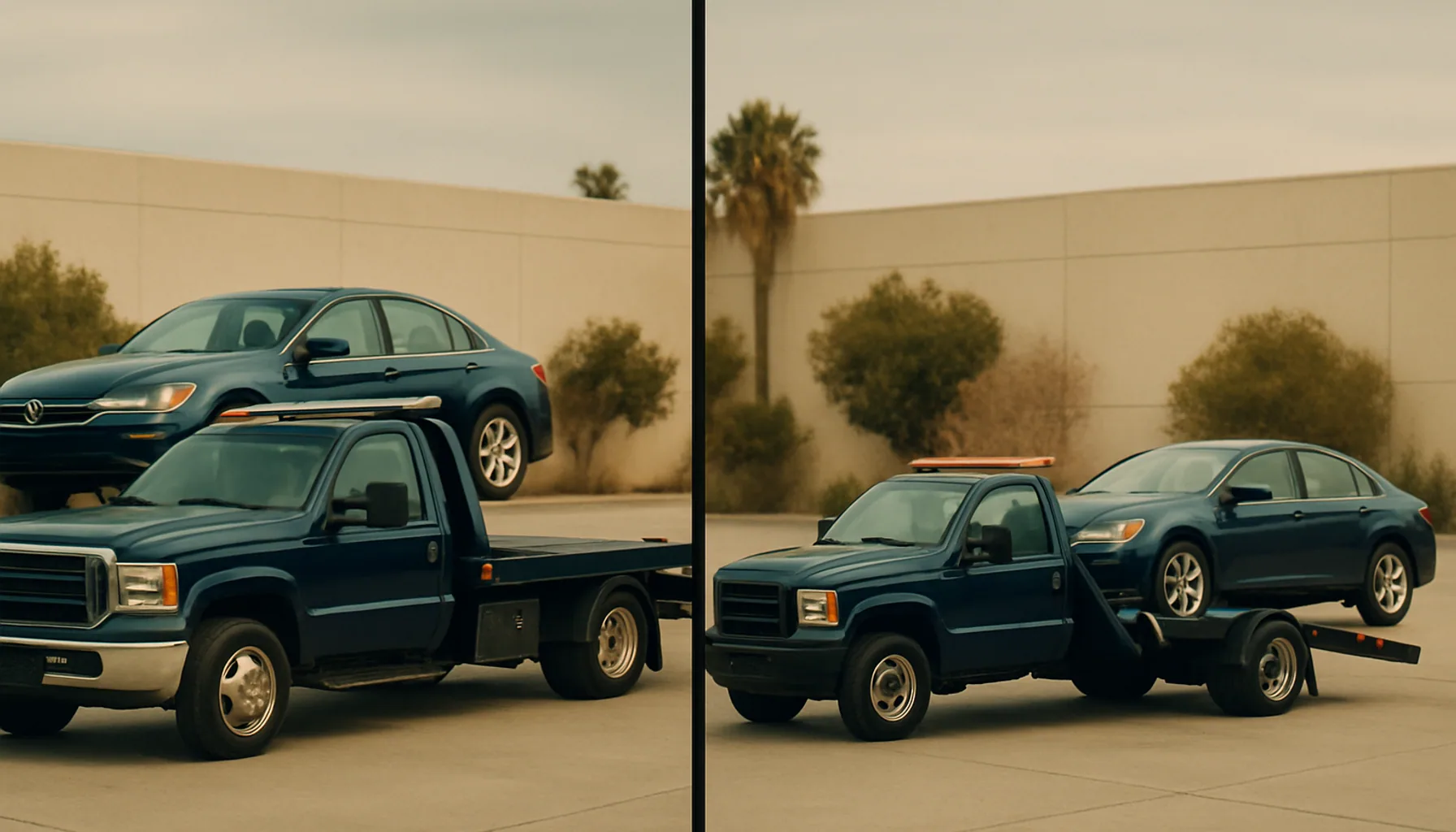
A wheel-lift tow truck uses a metal yoke (or cradle) that slides under the front or rear wheels of your vehicle and lifts them off the ground. The other set of wheels stays on the road and rolls as the truck drives. This is the modern version of the old hook-and-chain method, much safer than chains, but still a partial-contact tow.
How it works: The tow truck backs up to your vehicle, the hydraulic yoke slides under the drive wheels, the yoke lifts those wheels about 12 inches off the pavement, and the truck drives away with your car trailing behind it on two wheels.
Advantages:
- Faster to hook up, typically 5-10 minutes
- Less expensive than flatbed, usually $30-50 less per tow
- Can access tight spaces, parking garages, narrow alleys, packed parking lots
- Works well for short-distance tows to nearby shops
Limitations:
- Two wheels remain on the ground and accumulate mileage
- Not suitable for all drivetrains (more on this below)
- More exposure to road debris and weather during transport
- Not ideal for damaged vehicles that may have compromised suspension
What Is Flatbed Towing?
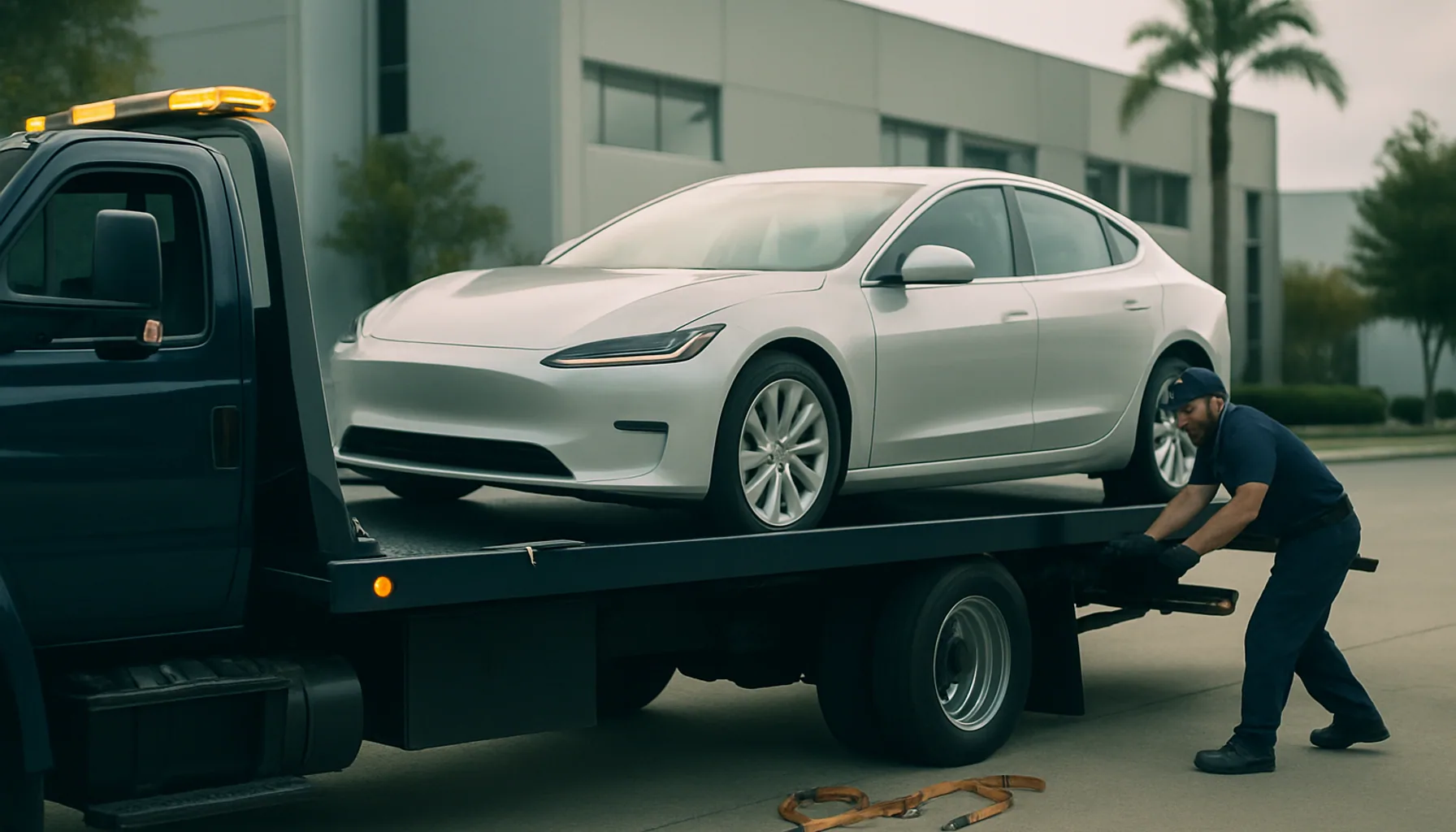
A flatbed (also called a rollback or slide-back) tow truck has a long, flat platform that tilts down to ground level. Your vehicle drives or is winched onto the platform, and then the platform tilts back up to level. Your entire vehicle rides on top of the truck with zero wheels on the road.
How it works: The truck operator tilts the bed down to create a ramp, winches or drives your vehicle onto the bed, secures it with straps and wheel chocks, and the bed tilts back to driving position. Your car is now a passenger on top of the truck.
Advantages:
- Zero wheel contact with the road, no drivetrain wear, no tire wear
- Safest method for any vehicle, nothing can scrape, drag, or bounce
- Required for certain drivetrains and vehicle types (see below)
- Better for long-distance transport, less vibration and stress on the vehicle
- Easier to load vehicles with deployed airbags, flat tires, or locked steering
Limitations:
- Takes slightly longer to load, typically 10-15 minutes
- Costs more, usually $30-50 premium over wheel-lift
- Requires more space to operate, the tilting bed needs clearance
- Truck is larger, so it can't always access very tight spaces
When Wheel-Lift Is the Right Choice
Wheel-lift towing is perfectly fine, and often the better choice, in these situations:
Front-wheel-drive (FWD) vehicles with no damage.If your car has a standard front-wheel-drive setup (which covers the majority of sedans, including Civics, Corollas, Camrys, Accords, Malibus, Elantras, and most economy cars), wheel-lift from the front wheels is safe and efficient. The rear wheels roll freely because they're not connected to the drivetrain.
Short-distance tows.If you're moving your car a few miles, say, from a breakdown on El Cajon Boulevard to a shop on University Avenue, wheel-lift is fast, affordable, and perfectly adequate for most standard vehicles.
Tight access situations.Stuck in a downtown San Diego parking garage? A narrow alley in Hillcrest? A packed apartment complex lot in North Park? Wheel-lift trucks are smaller and more maneuverable. Sometimes they're the only option that physically fits.
Rear-wheel-drive (RWD) vehicles lifted from the rear. If your RWD car is lifted by the rear wheels (the drive wheels), the front wheels roll freely with no drivetrain risk. This is the correct configuration for trucks like the Ford F-150, Chevy Silverado, and most traditional pickups.
When You Absolutely Need a Flatbed
There are situations where a flatbed isn't just preferable, it's the only safe option. Using a wheel-lift in these cases can cause thousands of dollars in damage.
All-Wheel Drive (AWD) and Four-Wheel Drive (4WD)
This is the big one. AWD and 4WD vehicles have a drivetrain that connects all four wheels. When you tow an AWD vehicle with two wheels on the ground, the wheels that are rolling turn the driveshaft, which turns components in the transfer case and differential, components that need the engine running to receive proper lubrication.
Towing an AWD vehicle on two wheels can burn out the transfer case, damage the center differential, or warp the driveshaft. Repair cost: $2,000 to $5,000 or more, depending on the vehicle.
Vehicles that need flatbed towing:Subaru (all models, every Subaru is AWD), Audi Quattro models, BMW xDrive models, Mercedes 4MATIC models, most modern crossover SUVs (RAV4, CR-V, CX-5, Tucson in AWD trims), Jeeps in 4WD mode, and any truck or SUV with a “4WD” or “AWD” badge.
If you're not sure whether your vehicle is AWD, check the badge on the trunk or tailgate. Or tell the towing company your exact year, make, model, and trim, they should be able to look it up.
Electric Vehicles (EVs)
Every major EV manufacturer, Tesla, Rivian, Ford (Mach-E, Lightning), Chevy (Bolt, Equinox EV), BMW, Mercedes, Hyundai (Ioniq), Kia (EV6), specifies flatbed-only towing in the owner's manual.
Here's why: EVs use electric motors connected directly to the wheels. When those wheels spin (as they do during wheel-lift towing), the motor acts as a generator, producing electricity that feeds back into the battery system. This regenerative braking effect, happening continuously during a tow with no electronic control, can overheat the motor, damage the inverter, or even cause battery pack issues.
Tesla's owner's manual is explicit: “Never transport Model 3 with the tires in contact with the ground.” The same applies to virtually every EV on the market.
If someone shows up with a wheel-lift truck to tow your Tesla, stop them. Ask for a flatbed. This is not optional.
Low-Clearance and Sport Vehicles
Cars with low ground clearance, Corvettes, Porsches, Lamborghinis, lowered vehicles, cars with body kits, can be damaged by the wheel-lift yoke or can scrape their bumpers and undercarriage during the lift process. Flatbed loading with a low-angle ramp is the safe choice.
Accident-Damaged Vehicles
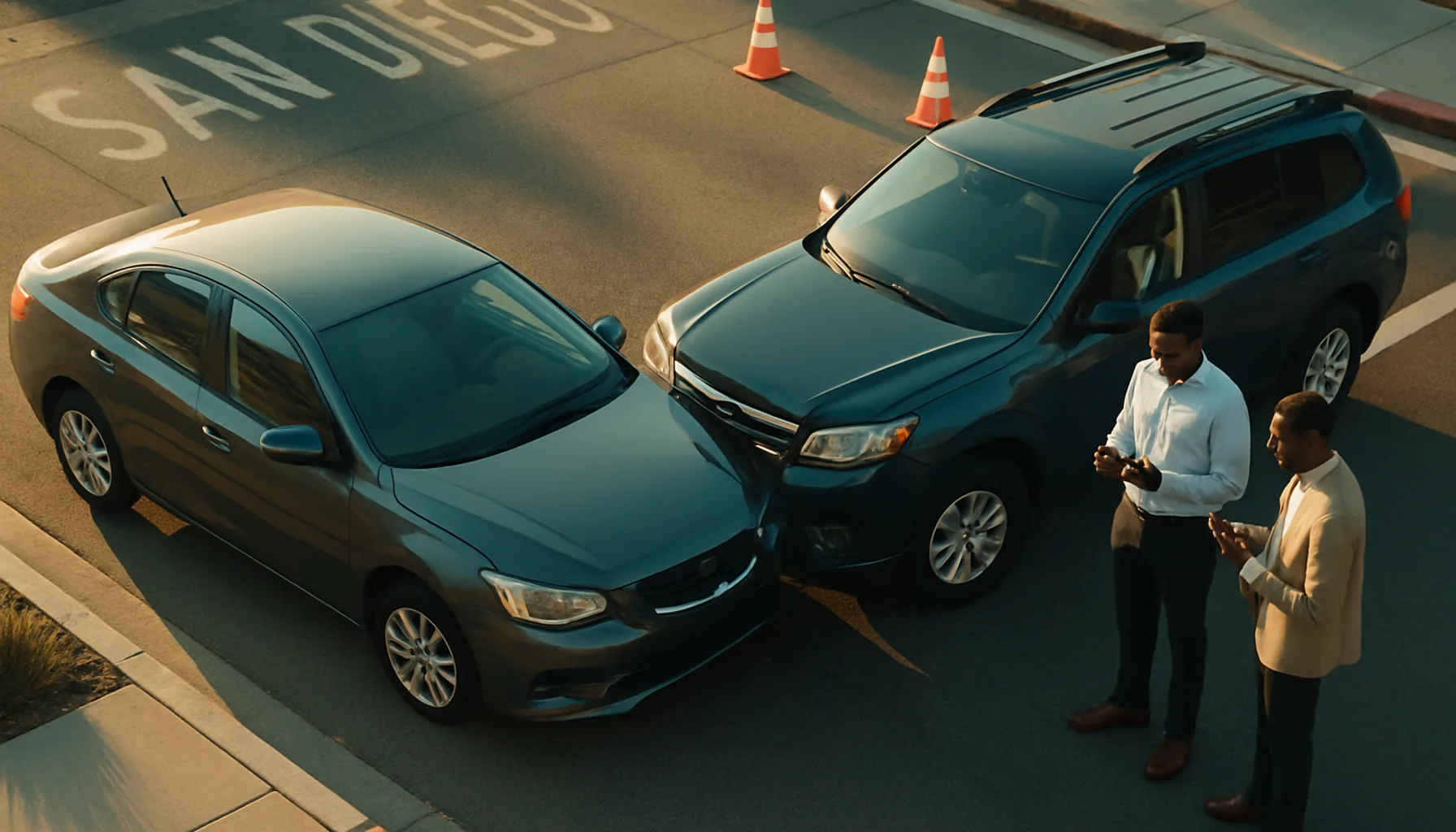
If your car was in a collision, you may not know the full extent of the damage. A bent subframe, cracked axle, or damaged suspension component might not be visible but could cause a wheel to lock up, detach, or fail during wheel-lift transport. Flatbed is the safer default for any collision-damaged vehicle.
Classic, Collectible, or High-Value Cars
If your car is worth more than you'd want to explain to an insurance adjuster, flatbed it. Classic cars with older suspension designs, collectible vehicles that are irreplaceable, and high-value luxury cars all warrant the extra protection of zero-road-contact transport.
Motorcycles
Motorcycles cannot be wheel-lift towed, they have two wheels in line, not four. Motorcycle transport requires a flatbed with soft straps, wheel chocks, and padding to prevent scratches. Any company that says they can “strap a bike to the back” without proper motorcycle equipment is going to damage your bike.
The Cost Difference, and Why It's Worth It
In San Diego, the typical price difference between wheel-lift and flatbed towing is $30 to $50. For a standard local tow, you might pay $75-85 for wheel-lift versus $120-135 for flatbed.
Think about that math. If you have an AWD vehicle and someone tows it on a wheel-lift to save $40, and it costs $3,500 to replace the transfer case, that's not a savings. That's an expensive mistake.
Even for vehicles where wheel-lift is technically fine, many drivers choose flatbed for peace of mind. There's something reassuring about seeing your car riding securely on a flat platform rather than being dragged on two wheels through traffic.
Common Misconceptions
“Flatbed is always better.” Not necessarily. For a standard FWD sedan on a short tow, wheel-lift is fine, faster, and cheaper. Flatbed is better for specific situations, not universally superior.
“Wheel-lift damages all cars.”It doesn't. When used correctly on appropriate vehicles, wheel-lift is safe and well-established. It's been the standard towing method for decades.
“My car is too heavy for a flatbed.” Standard flatbed trucks handle up to about 10,000 lbs, which covers nearly every passenger vehicle. For heavier vehicles (large trucks, RVs, commercial vehicles), medium-duty flatbed equipment is available.
“Any tow truck driver knows which method to use.” Unfortunately, not always. Inexperienced or careless operators sometimes use whatever truck they have available rather than what your vehicle requires. This is why it matters to tell the dispatcher your exact vehicle when you call.
How to Make Sure You Get the Right Tow
When you call a towing company, provide your vehicle's year, make, model, and trim level.Not “a Honda”, say “a 2022 Honda CR-V AWD.” This lets the dispatcher send the right truck the first time.
If you know you need a flatbed, because you have an AWD vehicle, an EV, a motorcycle, or a damaged car, say so upfront. A good dispatcher will confirm, but it helps to state it clearly.
At RJ Towing, we operate both flatbed and wheel-lift trucks and we dispatch the correct one for your vehicle every time. Our drivers are trained to assess the situation on arrival and switch to flatbed if needed, we'd rather take the extra time to do it right than risk damaging your car. Call (619) 304-0457 for towing anywhere in San Diego County, 24/7.
¿Necesitas ayuda en español? Llama al (619) 304-0457, hablamos tu idioma.
Written by the RJ Towing team, 15+ years serving San Diego. Learn more about our flatbed towing and wheel-lift towing services, or call (619) 304-0457 for any towing or roadside assistance need.