San Diego has one of the highest electric vehicle adoption rates in the country. Between the year-round sunshine feeding rooftop solar, California's EV incentives, and the general environmental consciousness of the region, EVs are everywhere, Teslas on every block in La Jolla, Rivians in Rancho Santa Fe, Chevy Bolts in North Park, and Hyundai Ioniq 5s on I-5.
But when an EV breaks down or runs out of charge, the towing process is fundamentally different from a gas car. Get it wrong, and you can cause thousands of dollars in drivetrain damage in less than a mile.
I'm Robert, the owner of RJ Towing. Over the past five years, EV towing calls have gone from rare to routine in our dispatch log. We've invested in the training and equipment to handle every EV on San Diego roads safely. This guide explains why EV towing is different, what can go wrong, and what you should do if your electric vehicle needs a tow.
Why Electric Vehicles Must Be Flatbedded
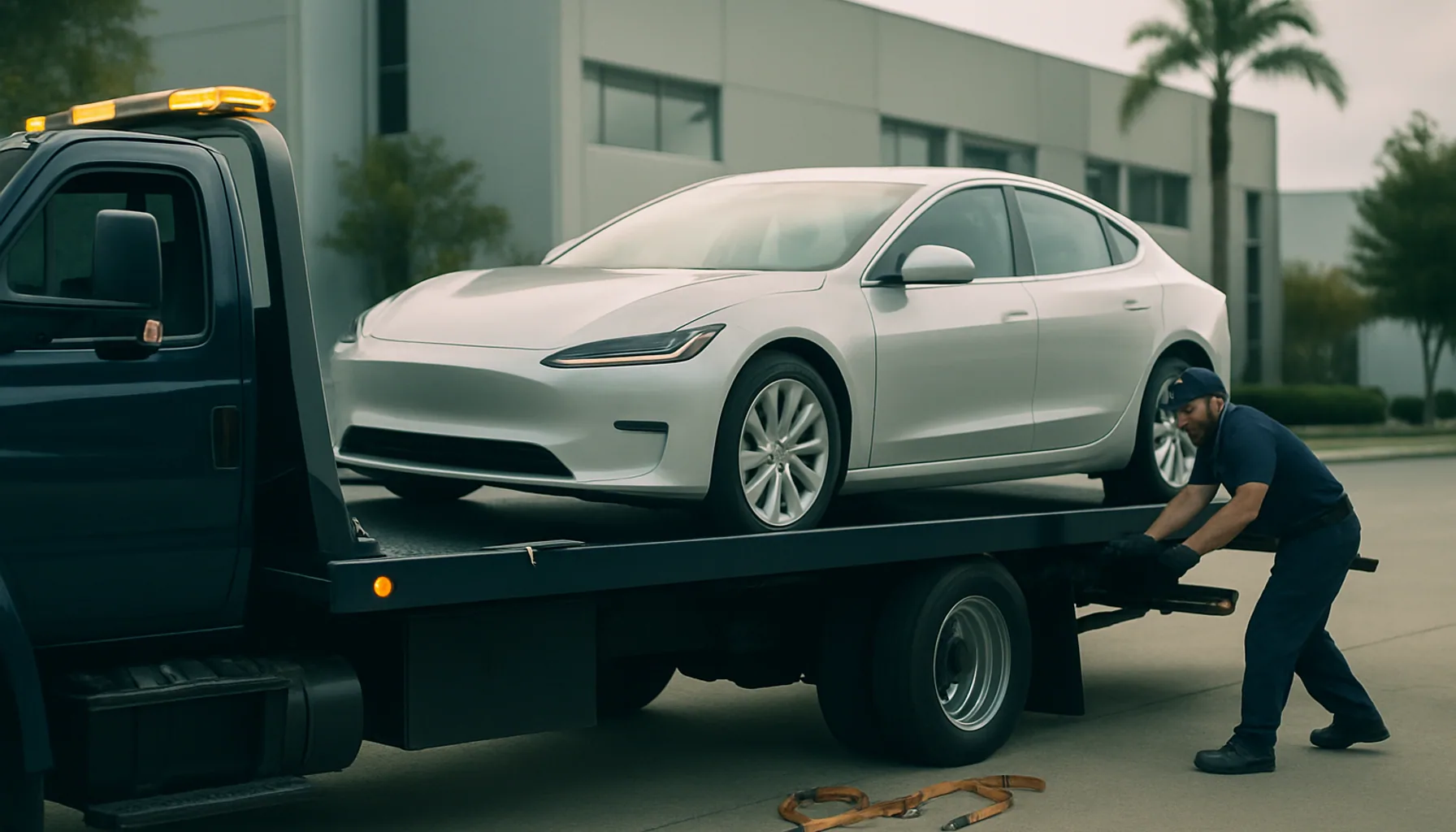
This is the most important thing to understand: most electric vehicles cannot be towed with their wheels on the ground. Not with a wheel-lift. Not with a dolly. Not even for a short distance “just to get it off the freeway.”
Here is why.
In a gas-powered car, the engine connects to the wheels through a transmission with a neutral gear. Put the car in neutral, and the wheels spin freely, the engine isn't mechanically engaged. That's why wheel-lift towing works for most gas cars.
In an electric vehicle, the electric motor is directly connected to the drive wheels through a fixed-ratio gearbox (no traditional transmission). There is no true mechanical “neutral” in the same sense. When the wheels of an EV spin, they spin the electric motor. And when the electric motor spins without the vehicle's cooling and lubrication systems active, it generates electricity with nowhere to go (regenerative braking effect) and creates heat with no cooling.
The result: dragging an EV with its drive wheels on the ground can overheat the motor, damage the reduction gear, and fry the power electronics. We're talking $5,000-$15,000+ in repair bills. Tesla's own manual explicitly states that Model 3, Model Y, Model S, and Model X must be transported on a flatbed or with all four wheels off the ground.
A flatbed (rollback) tow truck solves this completely. The entire vehicle rolls onto a level platform. Zero wheels touch the road. Zero drivetrain rotation. Zero damage risk.
Tesla-Specific Towing Guidelines
Teslas are the most common EV we tow in San Diego, so let's cover their specific requirements.
Transport Mode
All Tesla models have a “Transport Mode” accessible through the touchscreen: Controls > Service > Towing. This releases the parking brake and allows the car to roll onto a flatbed. Important:Transport Mode requires the 12V battery to be functional. If the 12V battery is dead (which can happen even if the main battery has charge), Transport Mode won't activate through the screen.
What If Transport Mode Won't Engage?
If the 12V system is dead or the screen is unresponsive:
- Model 3 / Model Y:There's a manual release for the parking brake accessed from the rear of the vehicle. It requires removing a small panel. Our drivers know the procedure for each model year.
- Model S / Model X: Older Model S and X vehicles have a tow-mode connector under the nose cone. Newer refreshed models have different access points.
- Key point: Do not attempt to pull the vehicle onto a flatbed with the parking brake engaged. This will flat-spot the tires and potentially damage the brake calipers. A professional tow operator with Tesla experience knows how to release the brakes safely.
Wheel-Lift with Dollies (Last Resort)
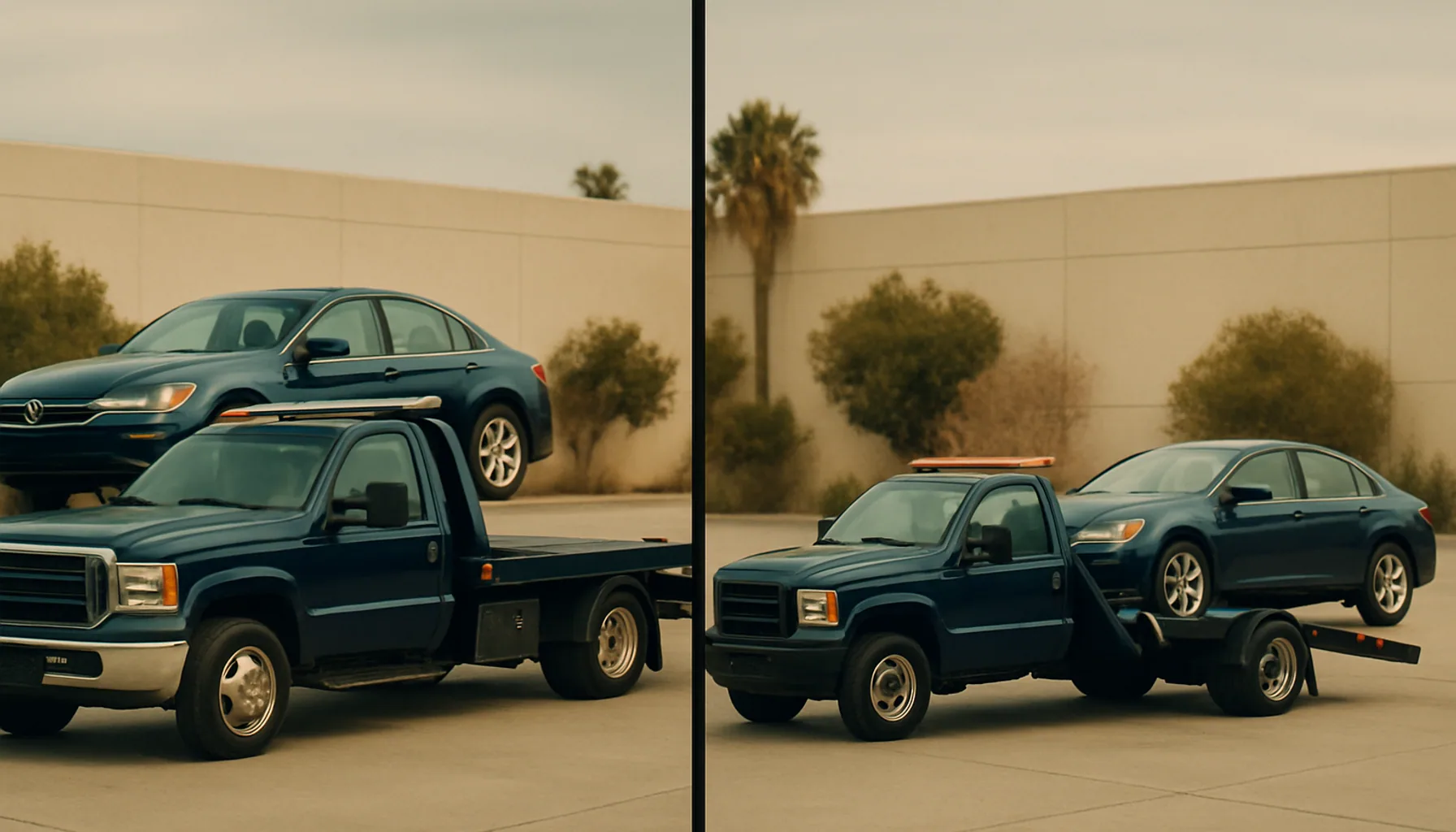
If a flatbed is unavailable for some reason, Tesla allows transport using a wheel-lift on the rear wheels with the front wheels on approved dollies, meaning all four wheels are off the ground. We carry dollies for this scenario, but a flatbed is always the preferred method. Less risk, less complexity, faster loading.
The 12V Battery Problem
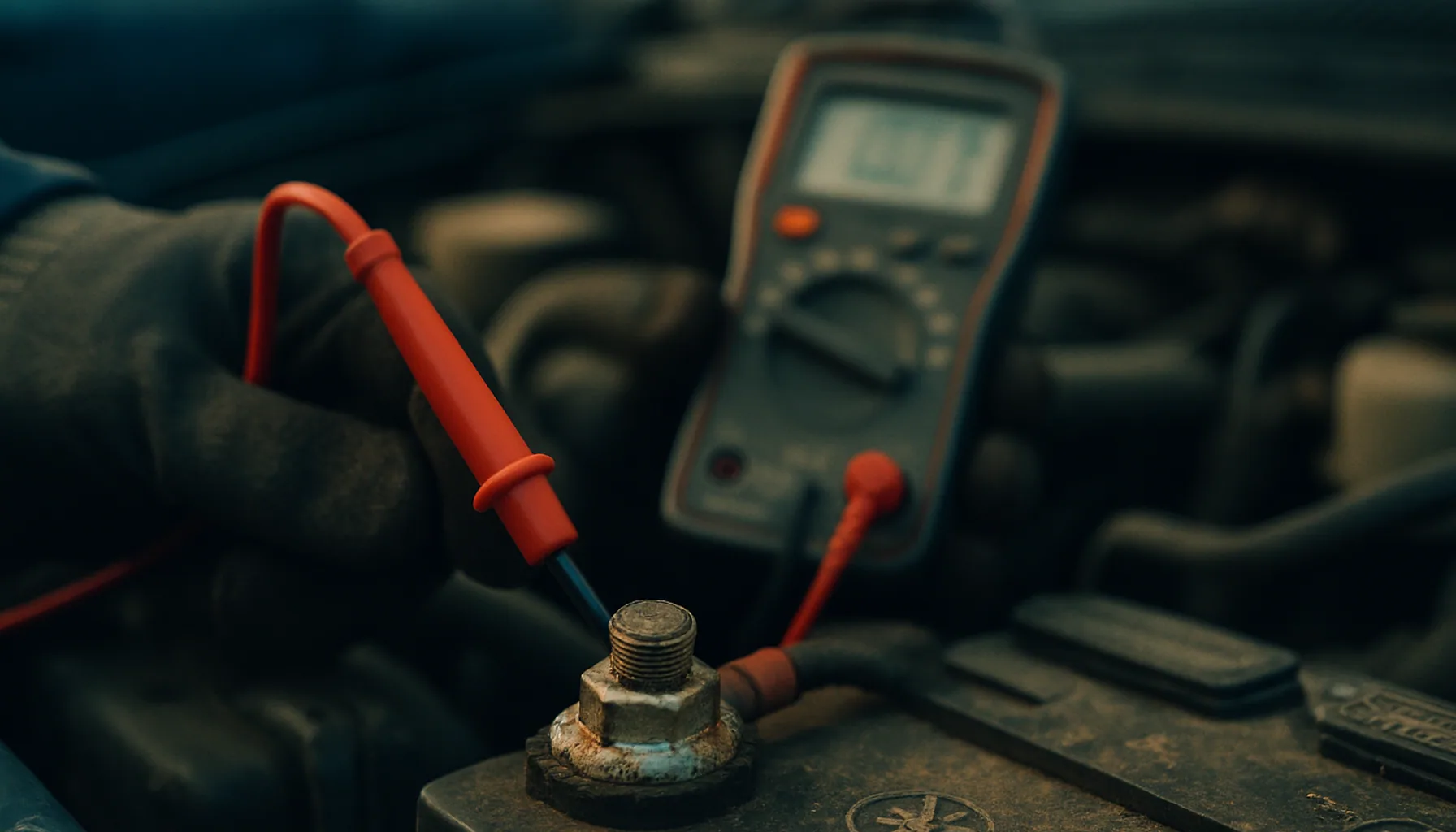
Every Tesla has two batteries: the large main battery pack (the one that stores the range) and a small 12V auxiliary battery (similar to a regular car battery) that powers the electronics, door handles, and control systems. The 12V battery can die while the main battery is fine. When this happens:
- The door handles may not present (Model S).
- The touchscreen stays blank.
- The car won't shift into any gear or mode.
- Transport Mode is inaccessible.
This is one of the most common Tesla tow calls we get. The solution is either a 12V jump (our technicians carry the right equipment) to restore enough power to activate Transport Mode, or manual parking brake release and careful winch-loading onto the flatbed.
What Happens When Your EV Runs Out of Charge
Running out of charge in an EV is not like running out of gas. With a gas car, we can deliver a few gallons of fuel and you're on your way. With an EV, there is no roadside equivalent, we can't bring a bucket of electricity to your location.
When an EV's battery hits 0%, here is what typically happens:
- The car enters a low-power limp modebefore fully dying. You'll see warnings on the dash. Speed is limited. Some features shut off. You have maybe 5-15 miles of reduced-speed driving left.
- Once the battery is fully depleted,the car stops. It won't move. You can't push-start it. There's no clutch to pop. It's a 4,500-pound brick.
- The only solution is a flatbed tow to a charging station or to your home charger. There is no roadside “charge delivery” service (yet, some companies are piloting mobile charging vans, but they're not widely available in San Diego as of mid-2026).
Where We Tow Dead EVs
When we flatbed a depleted EV in San Diego, the most common destinations are:
- Your home (if you have a Level 2 charger in your garage).
- A DC fast-charging station.San Diego has a solid network, Electrify America stations at Walmart and shopping centers, Tesla Supercharger locations throughout the county, ChargePoint stations at various retail locations. We'll help you identify the nearest compatible fast charger for your vehicle.
- A dealership or service center. If the battery depletion was caused by a fault (not just running it dry), you may want to go straight to the dealer for diagnostics.
Prevention: Avoiding the Dead EV Tow
- Don't trust the last 10%.EV range estimates become less accurate at low battery levels, especially in hilly areas (San Diego has plenty of hills). If you're below 15%, start actively looking for a charger.
- Factor in elevation changes. Driving from the coast up to Alpine or Julian in East County burns more charge than the flat-road estimate suggests. The reverse trip coming back downhill is more efficient, but you need to get there first.
- Know your local fast chargers. Before you need them. The PlugShare app is the most comprehensive map of charging stations in San Diego County.
- Climate control eats range. AC on a 95-degree San Diego summer day can reduce range by 15-25%. So can heating on the rare cold mornings.
Common EV Towing Mistakes
Mistake 1: Calling Any Tow Company
Not all tow companies understand EV towing requirements. Some operators will show up with a wheel-lift, hook up the rear wheels, and start dragging. By the time someone realizes the problem, the motor damage is done. Always confirm that the tow company will use a flatbed and has experience with your specific EV model. When you call RJ Towing at (619) 304-0457, tell dispatch it's an EV, we'll send the right truck and the right driver.
Mistake 2: Allowing Wheel-Lift Towing “Just for a Short Distance”
There is no safe distance to wheel-lift most EVs. Damage can occur in the first 500 feet. “Just to the end of the block” or “just off the freeway” is not a safe shortcut. Flatbed or nothing.
Mistake 3: Not Activating Transport Mode
If the car allows it, always put the EV in Transport Mode before the tow truck arrives. This disengages the parking brake and ensures the car can roll freely onto the flatbed. Winch-loading against an engaged parking brake is harder on the vehicle and takes longer.
Mistake 4: Ignoring the 12V Battery
EV owners often forget about the small 12V battery because they're focused on the main battery's charge level. But the 12V powers all the accessory systems. If it dies, the car becomes nearly impossible to interact with. Have your 12V tested during routine service, most EV dealerships will do this. If your EV is more than three years old, consider proactively replacing the 12V.
Mistake 5: Assuming the Tow Driver Knows
Even experienced tow operators may not have specific training on your EV model. Don't assume, communicate. Tell the driver: “This is a [make/model], it needs to be flatbedded, here's how to activate Transport Mode.” If you have the owner's manual in the glovebox (or on your phone), share the towing section.
EV Towing and San Diego's Infrastructure
San Diego County is better positioned for EV ownership than most American cities. The charging network is dense and growing. But gaps exist, particularly in East County, rural North County, and along the I-8 corridor heading toward the desert. If you're driving to Anza-Borrego or Julian, plan your charging stops carefully.
San Diego's mild climate is also an EV advantage, batteries perform best in moderate temperatures. You don't get the extreme cold-weather range loss that EV owners in the Midwest deal with. But summer heat above 100 degrees (common inland) can temporarily reduce range and slow charging speeds at DC fast chargers.
What RJ Towing Brings to EV Towing
Our flatbed towing fleet is equipped for every EV on San Diego roads. Our drivers are trained on Tesla Transport Mode procedures (all four model lines), Rivian, Lucid, Chevy Bolt/EUV, Ford Mustang Mach-E, Hyundai Ioniq 5/6, Kia EV6/EV9, BMW iX/i4, Mercedes EQS/EQE, and Polestar. We carry 12V jump equipment compatible with EV auxiliary systems, wheel dollies for backup scenarios, and soft straps that protect low-profile aerodynamic body panels.
If your EV needs a tow anywhere in San Diego County, call us at (619) 304-0457. Tell dispatch it's an electric vehicle so we send the right truck from the start. We respond 24/7, and we get it right the first time.
RJ Towing Service is a family-owned towing company at 2881 G St, San Diego, CA 92102. We provide flatbed towing for all electric vehicles, emergency towing, roadside assistance including jumpstart service for 12V auxiliary batteries, and full towing services across San Diego County. Available 24/7/365. Bilingual English and Spanish. Call (619) 304-0457.